The Madinah Charter: A Model for Muslims and a Hope for Humanity

By Dr. John Andrew Morrow

Muslims4Peace (March 17, 2019)

The following is the key-note lecture that was delivered by Dr. John Andrew Morrow at the ISNA Interfaith Banquet that was held in Chicago on Sunday, September 4th, 2016
Ladies and gentlemen. Brothers and sisters. I come here before you to express my opposition to the Islamic State. I do not back the Islamic State. I do not stand for the Islamic State. I do not defend the Islamic State. And I would not kill and die for the Islamic State. I am sure you are all pleasantly relieved that I come in peace. Now that you are at ease, please allow me to clarify the difference between an Islamic State and an Islamic Ummah.

The Islamic State is a misnomer. The Prophet Muhammad, peace and blessings be upon him, never, ever, described his system as a dawlah, a khilafah, a sultanah, a jumhuriyyah or a dimukratiyyah; he never described his system as a State, a Caliphate, a Sultanate, a Republic or a Democracy. On the contrary, he described it as an Ummah, a Motherland, a Homeland, a Federation or a Confederation.

In other words, the Prophet Muhammad, peace and blessings be upon him, wanted to create a Union of Free People under the precepts that he conveyed in the Covenants that he made with Jews, Christians, and Zoroastrians; namely, under the precepts of the Qur’an: freedom of movement, freedom of work, freedom of study, freedom of religion, and freedom of choice. These are the very freedoms that the Prophet granted in his Covenants.

Self-professed Islamists and self-professed Jihadists have been supposedly fighting to create a so-called Islamic State for over a century. Some claim that “the Qur’an is our Constitution” which essentially means that they have no concrete plan. Not only are they devoid of any concrete plan, they act and operate in ways that contradict the Qur’an. More than mere ignorance, such behavior is indicative of hypocrisy and dishonesty.
Imagine the paradox: a person fighting for Socialism who is not familiar with the Communist Manifesto; a person fighting for human rights who is not familiar with the Universal Declaration of Human Rights; a person who is fighting for democracy who is not familiar with the American Constitution. And yet we have people fighting for an “Islamic State” who ignore the fact that the Prophet created an Ummah, and not a State; and that he produced a constitution for that Ummah.

Al-Dustur al-Madinah. Al-Sahifah al-Madinah. The Ummah Document. The Constitution of Madinah. The Covenant of Madinah. If I mention the Qur’an, every Muslim has heard of the Qur’an. In fact, most non-Muslims have heard of the Qur’an. However, if I mention the Covenant of Madinah, most Muslims have never heard of it; and virtually no non-Muslims have ever heard of it. And yet this document comes second only to the Qur’an.
Fortunately, as a result of the publication of The Covenants of the Prophet Muhammad with the Christians of the World in 2013, the proclamation of the Marrakesh Declaration in 2016, and its endorsement by the Organization for Islamic Cooperation, Muslims are becoming increasingly aware of the Covenant, Constitution or Charter of Madinah. So, what’s the story behind the Covenant of Madinah? Let me take you back 1400 years.
The Prophet Muhammad, peace and blessings be upon him, receives revelation. He is persecuted for a decade. He flees with his followers from Makkah to Madinah. At that time, there were approximately twenty or thirty thousand people living in and around Madinah: half of them were Jewish and half of them were polytheists. The Muslims, however, only numbered in the hundreds. However, they all accepted the Prophet as their leader.

Did the Prophet kill all the non-Muslims? No, not at all. On the contrary, he said: “Fraternize in the name of God: you are all brothers.” He brought together Arabs, Jews, Christians, and pagans. In fact, the first thing that he did after arriving in Madinah was to protect the rights of all the citizens of his newly-formed Ummah. He prepared a Constitution for his Commonwealth in consultation with all of his constituents; the first political charter in history.

So, what is so special about al-Sahifah al-Madinah? What is the gist of the Covenant of Madinah? Let’s look at a few key concepts:

This is a document from Muhammad, the Prophet [governing the relations] between the believers and Muslims… and those who followed them and joined them and labored with them. They are one community [ummatun wahidah] to the exclusion of others.

According to the Constitution of Madinah, identity is not based on race, religion, kinship, class, gender, or tribal affiliation: it is based on membership in the Ummah. It is what we call today citizenship. I quote: “To the Jew who follows us belong help and equality. He shall not be wronged nor shall his enemies be aided.” As the Covenant of Madinah clearly stipulates: “Allah’s protection is one.”

For those who claim that there is only place for Muslims in an Islamic State, I point to the political charter prepared by the Prophet Muhammad, peace and blessings be upon him: “The Jews… are one community with the believers… The Jews have their religion and the Muslims have theirs.” The Ummah of Muhammad was a brotherhood of believers based on consultation:

The Jews must bear their expenses and the Muslims their expenses. Each must help the other against anyone who attacks the people of this document. They must seek mutual advice and consultation, and loyalty is a protection against treachery.

From day one, the Prophet’s system was an Ummah: it was pluralistic, multiethnic, multiracial, multilingual, and multireligious. Islam was preeminent, extending wings of mercy upon all those it embraced, be they Jews, Christians, polytheists, Zoroastrians, agnostics, or even atheists. They were all included in one Ummah.

The Prophet Muhammad, peace and blessings be upon him, granted Covenants of Protection throughout his prophetic mission, from the early years of his calling to the last years of his life. The Messenger of Allah, peace and blessings be upon him, granted Covenants of Protection to the Christians of Abyssinia, Arabia, Mount Sinai, Egypt, Jerusalem, Mount Carmel, Syria, Assyria, Armenia, and Persia. He granted them freedom of conscience, freedom of belief, and freedom of religious practice. He protected their religious establishments and prohibited forced conversions. As the Messenger of Allah repeated over and over again:

It is not permitted to remove a bishop from his bishopric or a Christian from his Christianity, a monk from his monastic life or a pilgrim from his pilgrimage or a hermit monk from his tower. Nor is it permitted to destroy any part of their churches, to take parts of their buildings to construct mosques or the homes of Muslims.

The Messenger of Allah, peace and blessings be upon him, described Christians as his flock and viewed himself as their shepherd. As he stated himself, “They are a part of my Ummah and an honor to me.” And while the Prophet came into conflict with a few Jewish tribes in Madinah, he reconciled with the Jews of Arabia, Yemen, and Palestine during his final years. As we read in the Covenant of the Prophet Muhammad with the Samaritans:

I, Muhammad b. ‘Abdullah b. ‘Abd al-Muttalib, have commanded that a covenant of protection and security be written for the Samaritan community for their persons, their children, their property, their wealth, their places of worship, their financial endowments, and to be binding in all the provinces and places in which they reside. We also pledge to behave with them and the people of Palestine in the best possible manner.

As we read in the Covenant of the Prophet Muhammad with the Jews of Khaybar and Maqna:

Yours is the safeguard of Allah and that of his Messenger with regard to your persons, belief, and property… You shall not have the annoyance of land-tax, nor shall a forelock of yours be cut off… No army shall tread on your soil, nor shall you be assembled [for military service], nor shall tithes be imposed on you, neither shall you be injured in any way…

The mercy of the Messenger of Allah, peace and blessings be upon him, was not limited to Muslims and the People of the Book. It extended to other faith communities as well. Take, for example, the Covenant of the Prophet Muhammad with the Zoroastrians which was granted to the brother of Salman al-Farsi, may Allah be pleased with him. It reads:

He has the protection of Allah and so do his sons over their lives and their wealth … without ever having to suffer injustice or be subject to harm…

I have removed from you that a forelock of yours shall be cut off, to wear clothing that differentiates you from the rest of the people, and the jizyah, and this until [the day] of the gathering and dispersal.

Their hands are free to do as they please concerning their fire temples and its wealth. No one should prevent them from… carrying out their funeral processions, and to abide by what they normally abide by concerning their religion and sect.

The Zoroastrians priests should be granted exclusive privileges from among the various sects of those people who are protected [by the Muslims].

As can be appreciated from these prophetic traditions, the Messenger of Allah did not simply ask Muslims to tolerate the People of the Book: he commanded his followers to engage with them, dialogue with them, and love them as fellow human beings. He called upon Muslims to protect them and defend them. It is what we call pluralism, the energetic engagement with diversity; the practical and concrete application of human rights.

So, yes, I support the Ummah; I back the Ummah; I stand with the Ummah; I defend the Ummah; and I would kill and die for the Ummah: the true Islamic State; not that un-Islamic State; not that pseudo-Islamic State; and not that anti-Islamic State. I believe in the Ummah of Muhammad, the Confederation of Believers that is based on the Covenant of Madinah and the Covenants of the Prophet; an Ummah based on justice, tolerance, and diversity. Amen.

Responsibility of Pluralism in Islam

Dr. John Andrew Morrow

Muslims4Peace (March 17, 2019)

Introduction

Muhammad ibn ‘Abd Allah was a Prophet. He was a Messenger of God. He was the Seal of the Prophets. This is something agreed upon by all Muslims: La ilaha illa Allah / Muhammadan Rasul Allah: there is no god but Allah and Muhammad is the Messenger of Allah.

Prophethood

Muhammad ibn ‘Abd Allah was a nabi or a prophet, namely, a person sent to preach the Word of God; a person who was following in the footsteps of his prophetic predecessors. He did not preach a new religion; he preached the primordial religion, Islam, submission and surrender to the One and Only God, the Creator and Sustainer of the Universe. Muhammad ibn ‘Abd Allah was also a rasul or a messenger, namely, a person who was sent with a scripture, a book from God, a revelation, and a code of law. He came forth, not only with ‘aqidah or beliefs but with shari‘ah or law, a comprehensive social, political, and economic system. Islam is a complete way of life. Unlike the prophets and messengers who preceded him and unlike the founders of other faith traditions, which focus on governing themselves, Muhammad, the Messenger of Allah, also focused on how Muslims should interact with others. If one reads the Old Testament, and one study the Halakha, one sees that that Jewish Law was concerning primarily with regulating the lives of Jewish people.

If one reads the New Testament, and studies Canon Law, one sees that Christian law was concerned primarily with regulating the lives of Christian people. There is little in the Judeo-Christian tradition regarding the rights of non-Jews and non-Christians. There is little with regards to the manner we should treat different faith communities.

For many religions, both Eastern and Western, it was pretty much: “Follow my way or I will send you on the highway to Hell.” Although the belief system and code of conduct of believers was clearly delineated, the rights of unbelievers were often reduced to the right to die. In many cases, it boiled down to “Convert the unbelievers or kill them all.”

Pluralism

Islam, however, came to the scene with an entirely novel and unique approach: pluralism. Unlike many other religions that insisted that salvation was for them and them alone, Islam insisted that salvation was within the reach of all righteous monotheists. So long as one believed in God, and one did good deeds and avoided evil deeds, one had hope in the mercy of Almighty God. As Almighty Allah, says in the Holy Qur’an:

Surely those who believe, and those who are Jews, and the Christians, and the Sabians, whoever believes in Allah and the Last day and does good, they shall have their reward from their Lord, and there is no fear for them, nor shall they grieve. (2:63)

As Mustafa Akyol, the author of The Islamic Jesus, has observed:

The fact that the Qur’an promised salvation to [the Sabians], along with Jews and Christians, reflects a theological liberality in early Islam that most contemporary Muslims would have a hard time to even consider. (68)

I have studied Islam for over three decades. I too was taught that only Muslims were believers and that only Muslims went to Heaven. I was taught that Christians were mushrikin or polytheists. I was taught that the People of the Book were kuffar or infidels who were destined to eternal damnation in Hell. I studied all the so-called Muslim authorities who misrepresented and misinterpreted the Qur’an to suit their intolerant purposes. I read all the so-called “authentic” traditions that extremists use to justify denying non-Muslims basic civil and human rights. I read all the so-called authoritative commentaries of the Qur’an that present an intolerant image of Islam. I can assert, openly, and unabashedly, that the extremist, fundamentalist, exclusivist, absolutist, fascist and supremacist interpretation of Islam is false. It represents a re-invention of Islam. It is not the Islam of the Rightly-Guided Caliphs. It is not the Islam of the Prophet Muhammad. And it most certainly is not the Islam of the Qur’an and the Islam of Almighty Allah.

Political Responsibility

When the Messenger of Allah established himself in Madinah, he consulted with Jews, Muslims, and polytheists, and created a constitution, the first of its kind in the political history of humanity. Known as the Covenant of Madinah, it placed all citizens on equal footing with equal rights and obligations. The citizens of the city-state of Madinah consisted of Jews and Arab non-Muslims. They numbered in the tens of thousands. Muslims, however were a minority during the early days of Muhammad’s rule: they numbered in the hundreds. Nonetheless, the Prophet proclaimed that they were a ummah wahidah, a single community, a constitutional confederation.

The term mu’minin or believers is used almost a thousand times in the Qur’an. As Mustafa Akyol recognizes, the term “was a broad umbrella that could incorporate all monotheists” (68). In the Constitution of Madinah and in the Covenants of the Prophet, the Messenger of Allah described the People of the Book as mu’minin or believers. And this makes perfect logical sense: anyone who believes in God is a believer. When the Messenger of Allah referred to his followers, those who embraced Islam, he used the term muslimin or Muslims. The Prophet spearheaded a movement of believers and created a Confederation of Believers. The rightly-guided Caliphs used the title Amir al-Mu’minin, Leader of the Believers, not Amir al-Muslimin, Leader of the Muslims. They were the leaders of all the citizens of the Ummah.

As Mustafa Akyol explains, “The existence of different religious traditions on earth is not an aberration but, quite the contrary the very will of God” (102). As we read in the Holy Qur’an,

And we have sent down the Book to you [Muhammad] with truth, confirming and conserving the previous Books. So judge between them by what God has sent down and do not follow their whims and desires deviating from the Truth that has come to you.

We have appointed a law and a practice for every one of you. Had God willed, He would have made you a single community, but He wanted to test you regarding what has come to you. So compete with each other in doing good. And every one of you will return to God and He will inform you regarding the things about which you differed. (5:48)

This is pluralism plain and simple, a condition or system in which various groups, principles, sources of authority or religious traditions co-exist in respect and tolerance. It is pluralism as defined by Diana L. Eck: energetic engagement with diversity; active seeking of understanding across lines of difference; encounter of commitments; and the language of dialogue.

One day, when the Prophet Muhammad was in Madinah, a delegation of Christians visited him from Najran. They debated and discussed religious matters. They agreed on some issues. They disagreed on other issues. When it came time for the Christians to perform their prayers, they excused themselves to leave the mosque. The Prophet Muhammad insisted that they pray in his mosque as it was a place of prayer and a house of God. And so the Christians prayed and celebrated mass in the mosque of the Prophet. This event is meticulously documented in Muslim sources. Not only is it authentic, it is exemplary. It is the very embodiment of Islamic ethics. Compare that to the actions of ISIS.

There are two visions of Islam that confront us today: an Islam of peace, mercy, tolerance, love, equality, and justice; and an Islam of war, cruelty, intolerance, hatred, inequality, and injustice; an Islam of terrorism, bloodshed, violence, misogyny, and bigotry. Forgive me if I have enough sense of decency and humanity to side with the former, True Islam, and repudiate all those who side with the latter which is nothing less than Anti-Islam. Muslims, true Muslims, must agree to disagree, not only with non-Muslims, but with each other. Had Allah willed, He would have made us all the same. He did not decree uniformity by means of barbarity, like ISIS wants to impose, but diversity and plurality under the wings of mercy. As Almighty Allah says in the Holy Qur’an:

O humankind, indeed We have created you from male and female and made you peoples and tribes that you may know one another. Indeed, the most noble of you in the sight of Allah is the most righteous of you. Indeed, Allah is Knowing and Acquainted. (49:13)

The Qur’an abolishes sexism. The Qur’an abolishes racism. The Qur’an abolishes absolutism. It calls upon different religious traditions to “compete with each other in righteousness” (5:48). It calls upon different religious traditions to defer their differences to the ultimate judgment of God. It is what is known as irja or “postponement;” namely, deferring religious differences to the afterlife.

The Prophet, peace and blessings be upon him, never converted people by force. As Almighty Allah says in the Holy Qur’an, “There is no compulsion in religion” (2:256). Consequently, the Messenger of Allah invited people to Islam. If they accepted Islam, alhamdulillah, praise be to Allah. If they preferred to keep their religion, masha’ Allah, it was the will of Allah. Perhaps they would come into Islam in the future, insha’ Allah, if it is the will of Allah. The Prophet was perfectly clear on the subject. As he wrote in the Treaty with the Kings of Himyar, cited in the Sirah of Ibn Ishaq:

If a Jew or a Christian becomes a Muslim, he is a believer with his rights and obligations. He who holds fast to his religion, Jew or Christian, is not to be turned from it. (643)

As Abu al-Fath al-Samiri, wrote in the Continuation of his chronicle,

The Prophet of Islam did not cause anyone distress throughout his life. He would present his belief before the people, accepting anyone who came to him, [yet] not compelling one who did not.

According to this 14th century Samaritan scholar, “Muhammad never mistreated any of the followers of the Law.” He also related a tradition transmitted by Samaritan elders that stated that: “Muhammad was a good and mighty person because he made a treaty of friendship with the Hebrew People.”

If the People of the Book did not wish to embrace Islam, Almighty Allah called upon them to follow their scripture firmly. As we read in the Holy Qur’an: “So let the followers of the Gospel judge according to what God has sent down in it” (5:47). This is exactly what the Messenger of Allah did. He judged Jews on basis of the Torah; Christians on the basis of the Gospel; and Muslims on the basis of the Qur’an. And that is precisely what the Rightly-Guided Caliphs did. As Imam ‘Ali, may Allah be pleased with him, said when he assumed the Caliphate:

Question me before you lose me. Question me, for I have the knowledge of those who came earlier and those who will come later. If the cushion (on which a judge sits) was folded for me (to sit on), I could give judgements to the people of the Torah by their Torah, to the people of the Gospels by their Gospels, to the people of Psalms by their Psalms and to the people of the Furqan (i.e. Qur’an) by their Furqan, so that each one of these books will be fulfilled and will declare, “O Lord, indeed ‘Ali has given judgement according to Your decree.

Conclusions

This is Islam, true Islam, the Islam of Allah, the Islam of the Prophet, and the Islam of all true Muslims. It is a religion that soothes the soul. It is a religion that satisfies the intellect with certainty. It is a religion based on ethics and morality. It is a religion of piety and righteousness. It is a religion that provides people with rights as opposed to depriving people of rights. It is a religion of personal growth and development; a religion of social justice.

Treaties of Prophet Muhammad with Christians

By Barbara Castleton

Islamicity (February 7, 2019)

According to Jewish and Christian tradition, a thousand years after Abraham, the Jewish people were slaves, locked in perpetual servitude in Egypt before being led to freedom by Moses. On their epic trek to Palestine, Moses broke the journey in the area around Mount Sinai. It was at its peak that Moses received from God a set of covenants, or laws, etched into clay tablets. These 10 Commandments became the foundation for a moral existence.

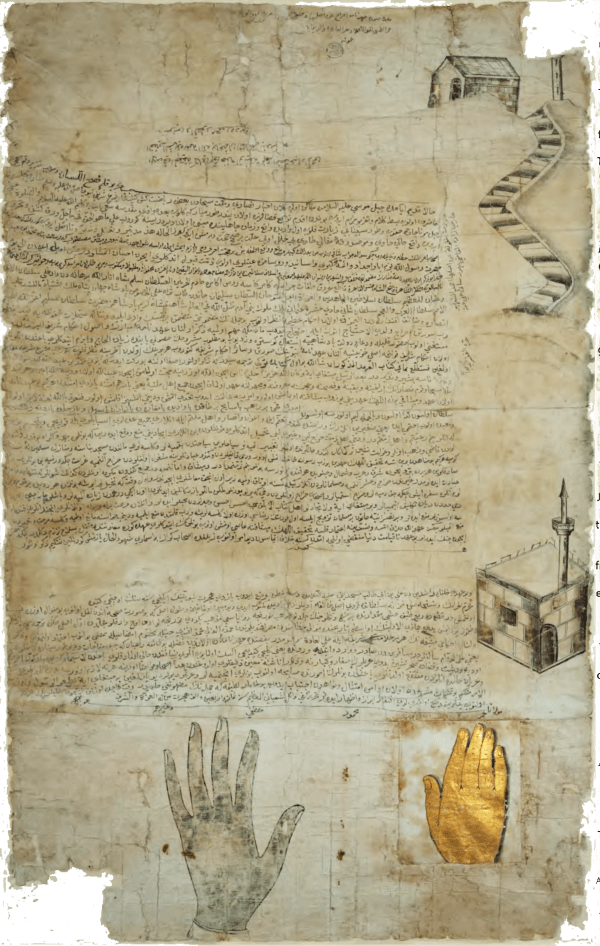
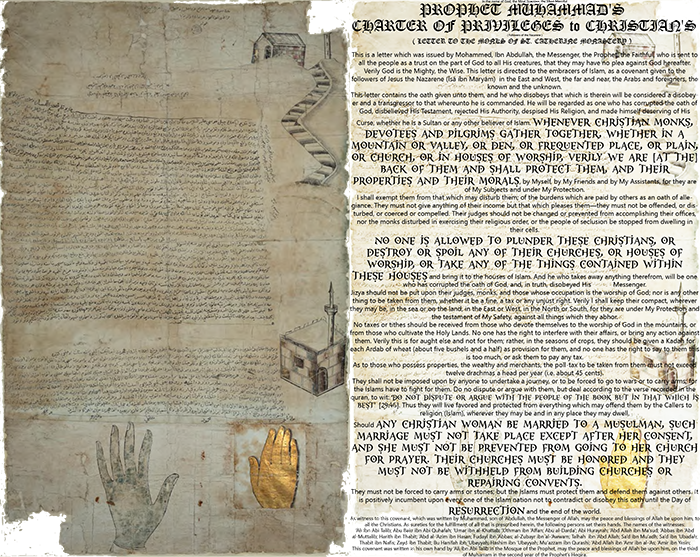
Over 1000 years later, in 2 AH or 624 CE, the Prophet Muhammad wrote and granted a different covenant to the monks at the Monastery of St. Catherine, a 60-year-old Christian abbey at the base of Mount Sinai. Though not commanding the recipients to honor their mother and father or desist in the creation of idols, the covenant from the Prophet Muhammad did something unheard of in the annals of history — it promised to protect the Christian monks and residents of the region from any incursions, attacks, or efforts to take over the Christian pilgrimage site. It swore to protect the monks singularly and as a group wherever they were. Further, the contract vowed to allow all inhabitants to keep the religion of their choice. The handwritten words on parchment, signed with the Prophet’s hand-print bound the Islamic nation to honor these promises “for all time, even unto the Day of Judgment and the end of the world.”

Dr. John A. Morrow appearing in Seattle, WA — Dec. 2017

Dr. John A. Morrow, academic, researcher, scholar, teacher, a member of the Canadian Métis community, and an activist, converted to Islam at the age of 16, while a high school student in his native Canada. Still a teen, Morrow continued to research Islam through dozens of texts, and he came across an 18th-century text written by Richard Pococke which described and translated parts of the treaty the Prophet Muhammad had initiated with the Monks of Mount Sinai.
In one section of the document, the text reads, “That whenever any of the monks in his travels shall happen to settle upon any mountain, hill, village, or other habitable place, on the sea, or in deserts, or in any convent, church, or house of prayer, I shall be in the midst of them, as the preserver and protector of them, their goods and effects, with my soul, aid, and protection…” These sentiments and others like them anchored Morrow’s attachment to the demonstrated compassion and teachings of Islam.

Thirty years, several academic degrees, and dozens of publications later, Dr. Morrow’s most recent work, The Covenants of the Prophet Muhammad with the Christians of His Time, is shaking up both the Islamic and Christian worlds. Whether intentionally or circumstantially, the treaty with the monks of Mt. Sinai and over a dozen other, similar documents, had receded from religious consciousness over the centuries and were squirreled away amid thousands of other papers in libraries scattered around Europe and the Middle East. With their virtual burial, a message of peace, inclusiveness, and tolerance was lost.

“No fear shall be upon them, nor shall they grieve.” This verse from the Holy Qur’an (2:62) refers to all the monotheists of the Prophet’s time, Jews, Christians, and Sabeans, and promises that these groups, being righteous in action, and aligned with Muslims in their belief in one God, would be protected. The above divine revelation, an edict transmitted to the Prophet Muhammad from God, guaranteed a future of unity and safety. Nevertheless, as an essential feature of his nation-building efforts, the Prophet Muhammad went even further, creating documents meant to serve vast populations living under Islamic rule as long as “the sea wets the shells on the shore.”

Due to those covenants, newly explored by Dr. Morrow, Muslims now have an additional rigorously authenticated religious resource — the detailed Ashtiname — peace letters or covenants spoken by the Prophet and written down verbatim. Through dictation and diplomacy, the Muhammad formulated treaties with most of the religious communities on the Arabian Peninsula and beyond. Some of the major covenants include:

The Covenant of the Prophet Muhammad with the Monks of Mount Sinai
The Covenant of the Prophet Muhammad with the Christians of Najran
The Covenant of the Prophet Muhammad with the Christians of the World I
The Covenant of the Prophet Muhammad with the Christians of the World II
The Covenant of the Prophet Muhammad with the Assyrian Christians
The Covenant of the Prophet Muhammad with the Christians of Persia
The Covenant of the Prophet Muhammad with the Armenian Christians
The Covenant of the Prophet Muhammad with the Jews of Maqna
The Covenant of the Prophet Muhammad with the Yemenite Jews
The Covenant of the Prophet Muhammad with the Zoroastrians
The Covenant of the Prophet Muhammad with the Coptic Christians of Egypt
The Covenant of the Prophet Muhammad with the Syriac Orthodox Christians
The Covenant of the Prophet Muhammad with the Samaritans
The Covenant of the Prophet Muhammad with the Zoroastrians

Over just a few years, the Islamic Ummah, or nation, expanded widely, until it gradually encompassed territory that included peoples of various sects. As Dr. Morrow suggests in his book, “A visionary long-term planner, the Prophet understood that the spread of Islam could take centuries. What he sought to create were the conditions under which the seeds of Islam could be planted and watered, thus enabling Muslim seeds to sprout, grow, and spread. If a population preferred to remain heathen, Christian or Jewish, they were entitled to do so as long as they entered into a covenant with the Islamic State as protected people.” Thus, rather than initiate any conflict with those populations, groups who had largely lived in harmony for generations, Muhammad resolved to ensure that they continued to feel connected and protected by detailing the mutuality of the support each provided, first from the Prophet, the Islamic Nation, and his designated successors or caliphs, and then from the group specified in the treaty.

Beyond protection, these covenants outlined forbidden actions, that is acts which the Muslims in these areas were prohibited from initiating. The rights and privileges granted to the Christians of Najran, a place in what is now southern Saudi Arabia where Christianity took root in the 4th century, are mirrored in most of the other treaties as well:

“To the Christians of Najran and its neighboring territories, God’s protection and the pledge of His Prophet extend to their lives, their religion, and their property. It applies to those who are present as well as those who are absent. There shall be no interference with the practice of their faith or their religious observances. There will be no change to their rights and privileges. No bishop shall be removed from his bishopric; no monk from his monastery, and no priest from his parish. They shall all continue to enjoy everything they previously enjoyed great or small. No image or cross shall be destroyed. They will not oppress or be oppressed.”

In a place and time where religion and pagan beliefs were a major driver of conflict and almost perpetual warfare, the covenants of the Prophet Muhammad provided an umbrella of safety and freedom for hundreds of communities. In covenants written for general societies, unlike the abbey on Mount Sinai which was an exclusively male population, Muhammad added previously unheard-of rights for women:

“Christians must not be subjected to suffer, by abuse, on the subject of marriages which they do not desire. Muslims should not take Christian girls in marriage against the will of their parents nor should they oppress their families in the event that they refused their offers of engagement and marriage. Such marriages should not take place without their desire and agreement and without their approval and consent. If a Muslim takes a Christian woman as a wife, he must respect her Christian beliefs. He will give her freedom to listen to her [clerical] superiors as she desires and to follow the path of her own religion.”

By bringing the Covenants of the Prophet Muhammad to light in an age that sorely needs models of tolerance, compassion, and community, Dr. Morrow hopes to reach and influence Muslims who may not be aware of the more global and far-reaching intentions of the Prophet and Christians who may have relied too heavily on the one-faceted view of Islam promulgated by the media. Invited to speak at conferences, churches, mosques, and institutions from Dubai to California, Dr. Morrow seeks to restore the trajectory of benevolent statecraft instituted by the Prophet Muhammed over 1400 years ago.

Barbara Castleton, MA, is a professor of English at South Seattle College. She is the co-author of Arabic, Islam, and the Allah Lexicon: How Language Shapes Our Conception of God and has published several articles on Arabic socio-linguistics in peer-reviewed journals.

Tratado del Profeta Muhammad con los monjes del Monte Sinaí

Mezquita de Sevilla (19 marzo, 2019)

Existe un tratado que mandó redactar el Profeta Muhammad, la paz sea con él, a Imam Ali, que Allah esté complacido con él, con los monjes del Monte Sinaí que es un ejemplo de la forma en la que los musulmanes han de relacionarse con aquellos que siguen otras creencias y formas de adoración.

Sobre la autenticidad de este tratado, el Dr. John Andrew Morrow escribe:

En términos de cadenas de transmisión, el ‘ahd, el ‘ahdnam o el ashtiname otorgado a los monjes del Monte Sinaí parece ser el más fuerte de todos los Pactos del Profeta. Ha sido transmitido por musulmanes y no musulmanes durante casi un milenio y medio. Desde un punto de vista académico, alcanza el grado más alto de certeza que podemos esperar de un documento que data del siglo VII. Se necesitaría una peligrosa combinación de ignorancia y arrogancia para que cualquier académico o erudito rechace este documento como una falsificación cuando se enfrenta a su ilustre linaje de transmisión. No solo es sólida su cadena de narración, sino también su contenido, que está en completo acuerdo con el Corán y la confiable Sunnah. Si bien algunos pueden argumentar que el Pacto para el Monasterio de Santa Catalina fue un acto excepcional limitado a un lugar y personas en particular y se aplicó solo por un tiempo específico, el Profeta mismo estipuló que sus disposiciones se aplicaban a todos los cristianos pacíficos, que eran amigos y aliados de Los musulmanes, por todos los tiempos por venir.

Respecto a su reconocimiento y aplicación por parte de los Califas rectamente guiados, y prácticamente todos los líderes musulmanes después de esto, dice:

Según el registro histórico, las libertades otorgadas por el Profeta a los monjes del Monte Sinaí, junto con otras comunidades, fueron honradas por Abu Bakr, ‘Umar, ‘Uthman y ‘Ali, así como los Omeyas y los’ Abassids.

Y prácticamente todos los líderes de los musulmanes -y muchos de los no musulmanes- hasta ahora. (Para una exposición completa y con citas de esto podéis consultar el artículo completo aquí (en inglés))

El tratado, cuya fuente es fidedigna y ha sido transmitido por fuentes musulmanas y no musulmanas, dice lo siguiente (de una traducción al inglés por Anton F. Haddad):

Esta es una carta escrita por Mohammed, Ibn Abdullah, el Mensajero, el Profeta y el Creyente, que ha sido enviado a todos los pueblos como una fideicomiso de parte de Dios a todas Sus criaturas, para que no puedan declararse en contra de Dios en lo sucesivo. Verdaderamente Dios es Omnipotente, el Sabio. Esta carta está dirigida a quienes abrazan el Islam, como un convenio con a los seguidores de Jesús el Nazareno, en el Este y el Oeste, los lejanos y los cercano, los árabes y los extranjeros, los conocidos y los desconocidos.

Esta carta contiene el juramento que se les ha dado, y el que desobedezca lo que está en ella será considerado incrédulo y transgresor de lo que se le ha mandado. Será considerado como uno de los que ha corrompido el juramento de Dios, no ha creído Su Testamento, ha rechazado Su Autoridad, ha despreciado a Su religión y se ha hecho merecedor de Su maldición, ya sea un sultán o cualquier otro creyente del Islam. Cada vez que los monjes, devotos y peregrinos cristianos se reúnen, ya sea en una montaña o valle, o plano, o lugar frecuentado, o llano, o iglesia, o en casas de culto, ciertamente estaremos [detrás de ellos] y los protegeremos, así como  sus propiedades y su moral, yo mí mismo, mis compañeros y mis asistentes, puesto que parte son de mis subditos y están bajo mi protección.

Los eximiré de lo que pueda perturbarlos; de las cargas que son pagadas por otros como un juramento de lealtad. No deben dar nada de su ingreso sino lo que les agrada, no deben ser ofendidos, molestados, forzados ni obligado. Sus jueces no deben ser cambiados o impedidos de cumplir con sus funciones, ni los monjes perturbados en el ejercicio de su orden religiosa, ni a las personas de reclusión a impedido de vivir en sus celdas.

A nadie se le permite saquear a estos cristianos, o destruir o estropear cualquiera de sus iglesias o casas de culto, o tomar cualquiera de las cosas contenidas en estas casas y llevarlas a las casas del Islam. Y aquel que haga algo de esto, será uno que ha corrompido el juramento de Dios y, en verdad, ha desobedecido a su Mensajero.

La Yizya no debe imponerse sobre sus jueces, monjes y aquellos cuya ocupación es la adoración de Dios; tampoco se les puede quitar ninguna otra cosa, ya sea una multa, un impuesto o cualquier derecho injusto. En verdad, mantendré el pacto, dondequiera que estén, en el mar o en la tierra, en el Este o en el Oeste, en el Norte o en el Sur, porque están bajo Mi Protección y el testamento de Mi Seguridad, contra todas las cosas que aborrecen.

No deben recibirse impuestos ni diezmos de aquellos que se dedican a la adoración de Dios en las montañas, o de aquellos que cultivan las Tierras Santas. Nadie tiene el derecho de interferir con sus asuntos, o iniciar acciones en su contra. En verdad esto es para algo más y no para ellos; más bien, en las temporadas de cultivos, se les debe dar un Kadah por cada Ardab de trigo (unos cinco puñados y medio) como provisión para ellos, y nadie tiene derecho a decirles “esto es demasiado”, o pedirles que paguen cualquier impuesto.

En cuanto a los que poseen propiedades, los ricos y los comerciantes, el impuesto que se les debe quitar no debe exceder los doce dracmas por persona por año.

Nadie les impondrá a emprender un viaje, o ser forzados a ir a la guerra o a llevar armas; porque los musulmanes tienen que luchar por ellos. No discutáis o disputéis con ellos, sino tratarlos de acuerdo con el versículo registrado en el Corán, a saber: ” Y no discutas con la gente del Libro sino de la mejor manera” [29:46]. Por lo tanto, vivirán favorecidos y protegidos de todo lo que los ofenden, dondequiera que estén y en cualquier lugar donde puedan habitar.

En caso de que una mujer cristiana esté casada con un musulmán, dicho matrimonio no debe celebrarse excepto después de su consentimiento, y no debe impedirse que vaya a su iglesia a orar. Sus iglesias deben ser honradas y no se les debe impedir construir iglesias o reparar conventos.

No deben ser obligados a portar armas o piedras; pero los musulmanes deben protegerlos y defenderlos contra otros. Incumbe a cada uno de los seguidores del Islam no contradecir o desobedecer este juramento hasta el Día de la Resurrección y el fin del mundo.

Sobre este tratado, Ibn Kazir, conocido erudito, exégeta del Corán e historiador, hace un resumen en sus libro Qisas al-Anbiya (Historias de los Profetas):

Fue en esta época [después del Tratado de Hudaybiyyah] que el Profeta concedió a los monjes del Monasterio de Santa Catalina, cerca del Monte Sinaí, su carta de derechos mediante la cual aseguraron a los cristianos privilegios e inmunidades nobles y generosas. Se comprometió y ordenó a sus seguidores a proteger a los cristianos, defender sus iglesias y las residencias de sus sacerdotes y protegerlos de todos los ataques. No debían ser gravados injustamente; ningún obispo debía ser expulsado de su diócesis; ni a ningún cristiano se le debía obligar a rechazar su religión; ningún monje debía ser expulsado de su monasterio; ningún peregrino debía ser impedido de su peregrinación; ni las iglesias cristianas serían derribadas por construir mezquitas o casas para los musulmanes. Las mujeres cristianas casadas con musulmanes debían disfrutar de su propia religión y no ser sometidas a compulsión o molestia de ningún tipo. Si los cristianos necesitaran asistencia para reparar sus iglesias o monasterios, o cualquier otro asunto relacionado con su religión, los musulmanes debían ayudarlos. Esto no debía considerarse como un apoyo a su religión, sino simplemente como una asistencia en circunstancias especiales. En caso de que los musulmanes mantuviesen hostilidades con cristianos de fuera (del territorio gobernado por los musulmanes), ningún cristiano residente entre los musulmanes debía de ser tratado con desprecio a causa de su credo. El Profeta declaró que cualquier musulmán que violase cualquier cláusula de la Tratado debía ser considerado como un transgresor de los mandamientos de Allah, un violador de Su testamento y negligente de Su creencia.

Shaykh Saad al-Azhari endorses the Covenants

THE COVENANT OF THE PROPHET MUHAMMAD WITH THE JEWS OF KHAYBAR AND MAQNA

Image result for judaism islam

By Dr. John Andrew Morrow

The Muslim Post (March 15, 2019)

“The Jews of the Islamic world were not restricted in this way. Like Christians, they were accorded the status of dhimmi (protected minority), which gave them civil and military protection, as long as they respected the law and supremacy of the Islamic state. The Jews of Islam were not persecuted… they were given full religious liberty, were able to run their affairs according to their laws, and were more able than the Jews of Europe to participate in mainstream culture and commerce.” Karen Armstrong, Islam: A Short History

“Discussing the conditions under which Jews and Christians could remain on Muslim soil and be considered part of the community, Muhammad added: “He who wrongs a Jew or a Christian will have me as his accuser.” Again and again, he recommended this tolerance toward the faith which so resembled his own. In all his treaties with Christians he invariably guaranteed their liberty of worship.” R.V.C. Bodley, The Messenger

The Text of the Covenant

[Translated by Hartwig Hirschfeld in 1903 and edited by John Andrew Morrow in 2015]

In the Name of [Allah], the Most Compassionate, the Most Merciful.

This is a letter from Muhammad, the Messenger of Allah, to Haninah and the people of Khaybar and Maqna and their progeny as long as the heavens are above the earth, peace. I praise unto you Allah, save whom there is no god but He.

Now [I say that] he has revealed unto me that you are about to return to your cities and to the inhabitants of your dwelling-place. Return in safety, in the protection of Allah and that of his Messenger.

Yours is the safeguard of Allah and that of his Messenger with regard to your persons, belief, and property, slaves, and whatever is in your possession. You shall not have the annoyance of land-tax, nor shall a forelock of yours be cut off.

No army shall tread on your soil, nor shall you be assembled [for military service], nor shall tithes be imposed on you, neither shall you be injured in any way. No one shall leave his mark on you, you shall not be prevented from wearing slashed or colored garments, nor from riding on horseback, nor from carrying any kind of arms.

If anyone attacks you, fight him, and if he is killed in the war against you, none of you shall be executed for his sake nor is ransom to be paid for him. If one of you kill a Muslim intentionally, he shall be dealt with according to Muslim law. No disgraceful charges shall be brought against you, and you shall not be as other [non-Muslim] poll-tax payers.

If you ask assistance, it shall be granted to you, and if you want help you shall have it. You shall not be punished for white, nor yellow, nor brown (garments), nor for a coat of mail, nor […] Not a shoe-lace of yours shall be cut. You shall not be hindered entering the mosques, nor precluded from governing Muslims.

You shall have no other ruler except out of your own midst, or from the Family of the Messenger of Allah. Room shall be made for your funerals, except when they trespass on a sacred spot (mosque). You shall be held in honor on account of your own high station and the station of Ṣafiyyah, the daughter of your uncle [who became a wife of the Prophet].

It shall be incumbent upon the people of the house of the Messenger of Allah and upon the Muslims to uphold your honor, and not to touch you. If any of you goes on a journey, he shall be under the safeguard of Allah and his Messenger. “There is no compulsion in matters of religion” [Qur’an 2:256].

If any of you follows the religion of the Messenger of Allah and his command, he shall have one fourth of what the Messenger of Allah has ordered to be given to the People of his House, to be given when the Quraysh receive their portions, viz. fifty dinars. This is a present from me for you.

The Family of the House of the Messenger of Allah and all the Muslims are charged to fulfill all that is in this letter. Whoever deserves well of Haninah and the people of Khaybar and Maqna, all the better for him; but he who does them evil, all the worse for him.

Whoever reads this my letter, or to whomever it is read, and he alters or changes anything of what is in it, upon him shall be the curse of Allah and the curse of the cursing of all humankind. He is beyond my protection and intercession on the day of Resurrection, and I am his foe. And who is my foe is the foe of Allah, and he who is the foe of Allah goes to hell […] and bad is the abode there.

The Witness is Allah, like whom there is no God, and Allah is sufficient as a witness, and his angels, and those Muslims who are present.

‘Ali, the son of Abu Talib, wrote it with his writing, while the Messenger of Allah dictated it to him, letter-for-letter, on Friday, the 3rd of Ramadan, in the year five of the hijrah.

Witnesses: [‘Ammar] b. Yasir; Salman the Persian, the friend of the Messenger of Allah; Abu Darr al-Ghiffari.

Face aux attentats terroristes, où sont les «musulmans modérés»?

Par John Andrew Morrow

Shafaqna

SHAFAQNA – Après chaque nouvelle attaque terroriste en Occident, faussement commise au nom de l’Islam par des hérétiques ou des mercenaires, des politiciens tentent de profiter de la tragédie en faisant de tous les musulmans des boucs émissaires et en diabolisant toute une religion mondiale, alors même que plus de 90% des victimes de Daech sont des musulmans, qu’ils sont en première ligne pour les combattre et que les crimes commis par l’Occident ou Israël, principaux soutiens du takfirisme et du wahhabisme, ne sont (légitimement) pas imputés au christianisme ou au judaïsme. Le Dr John Andrew Morrow présente des faits avérés sur l’Islam et les musulmans. 

Sources: https://covenantsoftheprophet.wordpress.com/2017/05/19/if-muslims-are-so-moderate-why-dont-they-speak-out-against-terrorism

https://www.youtube.com/watch?v=bgyrOycqWRQ

Traduction : fr.shafaqna.com

Selon le Pew Research Center, 93% du monde islamique est composé de sunnites, chiites et soufis. Ce sont les musulmans orthodoxes. 7% du monde islamique sont composés de Salafistes, Wahhabis et Takfiris. Ce ne sont pas des musulmans orthodoxes. Ce sont des hérétiques. Ce sont les personnes désignées en Occident comme des islamistes, des jihadistes et des islamo-fascistes. En termes statistiques, il n’y a absolument aucun doute que l’écrasante majorité des musulmans sont tout aussi respectueux des lois que les membres de toute autre foi monothéiste. Quiconque prétend autre chose est malhonnête et trompeur…

[Ceux qui stigmatisent les musulmans] invoquent le fait que de nombreux musulmans du Moyen-Orient et de l’Asie du Sud soutiennent la peine de mort pour l’apostasie. Cependant, il ignore commodément l’image plus large. 71% de musulmans tunisiens, 73% de musulmans thaïlandais, 78% de musulmans tadjiks, 83% de musulmans turcs, 82% de musulmans indonésiens, 85% de musulmans de Bosnie et de Russie, 89% de musulmans du Kosovo, 92% de musulmans albanais et 96% des musulmans kazakhs s’opposent à la peine de mort pour les personnes qui quittent l’Islam…

Plus de 60% des musulmans soutiennent la démocratie. Si cela semble faible pour certains, c’est parce que les musulmans ont été victimes de fausses démocraties depuis la fin de l’époque coloniale. Si 40% s’opposent à la démocratie, c’est la « démocratie » des dictateurs et des monarques militaires à laquelle ils s’opposent, ainsi que la « démocratie » de l’invasion et de l’occupation occidentales. Interrogés sur la liberté religieuse, 92,6% des musulmans ont affirmé que c’était une bonne chose. Comme le confirme le Pew Research Center, la majorité des musulmans s’opposent à l’extrémisme, au terrorisme et aux attentats suicide…

Dénoncer les islamistes radicaux et les djihadistes n’est pas un acte islamophobe. Je le fais tout le temps et je suis un musulman pratiquant. Mettre tous les musulmans dans le même sac, les peindre grossièrement, falsifier les faits et essayer de convaincre les gens que même les femmes musulmanes éduquées, non voilées et sans accent sont des extrémistes, c’est l’exemple même de l’islamophobie. Il est également islamophobe de prétendre que les musulmans ne se mobilisent pas pour dénoncer la terreur islamiste parce qu’ils ont secrètement une sympathie pour les terroristes. Faux ! Ils le dénoncent tout le temps, par millions. Les voix musulmanes, cependant, sont systématiquement censurées par les médias dominants.

Combien de personnes ont entendu parler du Code d’honneur musulman de l’ISNA (Société Islamique d’Amérique du Nord)? Il dénonce l’extrémisme et la violence.

Combien de personnes ont entendu parler de la Fatwa contre le terrorisme et les attentats-suicides? Publiée par le Dr Muhammad Tahir al-Qadri en 2010, elle affirme que « le terrorisme est le terrorisme, la violence est la violence, ils n’ont pas leur place dans l’enseignement islamique et aucune justification ne peut être fournie pour eux. » En 2014, il a affirmé que « L’idéologie de Daech revient à de la mécréace pour l’Islam. C’est un anti-Islam, opposé aux enseignements du Prophète de l’islam. »

Combien de personnes ont entendu parler de l’Initiative des Pactes? Inspirée par Les Pactes du Prophète Muhammad avec les Chrétiens du monde, ce mouvement international de musulmans est impliqué dans la protection des juifs, des chrétiens et des musulmans persécutés et a été à l’avant-garde de la guerre idéologique contre Daech.

Combien de personnes ont entendu parler de la Fatwa de Bin Bayyah? En septembre 2014, Cheikh Abdallah Bin Bayyah, l’un des savants les plus influents de l’Islam sunnite, a promulgué une longue fatwa condamnant Daech.

Combien de personnes ont entendu parler de la Lettre à Baghdadi? Sortie en septembre 2014, c’est une réfutation méticuleuse de Daech. Elle a été signée par plus d’une centaine d’éminents spécialistes de l’Islam et dirigée personnellement vers le chef du faux Etat islamique.

Combien de personnes ont entendu parler du Message d’Amman? Publié en novembre 2004 et signé par 200 chercheurs islamiques de plus de 50 pays, il appelle à la tolérance dans le monde musulman.

Combien de personnes ont entendu parler de la Déclaration de l’Organisation de coopération islamique? Publiée en 2014, elle déclare que Daech n’a « rien à voir avec l’Islam » et a commis des crimes « qui ne peuvent être tolérés ».

Combien de personnes ont entendu parler de la Fatwa d’al-Azhar? Émise en 2014, elle affirme que Daech est « un danger pour l’Islam ».

Combien de personnes ont entendu parler de la Déclaration de la Ligue arabe? Publiée en 2014, elle dénonce les « crimes contre l’humanité » commis par Daech.

Combien de personnes ont entendu parler de la Fatwa qui a été émise par le premier clerc turc, le Mufti Mehmet Gormez ? Émise en 2014, elle affirme que Daech « fait des dégâts considérables» contre l’Islam et les musulmans.

Combien de personnes ont entendu parler des condamnations contre Daech émises par le CAIR (Conseil pour les relations islamo-américaines) ? Depuis 2014, ils ont condamné à maintes reprises Daech comme « non-islamique et moralement répugnant ».

Combien de personnes ont entendu parler de la Déclaration faite par le Conseil musulman de la Grande-Bretagne? Émise en 2014, elle affirme que « la violence n’a pas sa place dans la religion. »

Combien de personnes ont entendu parler de la Fatwa publiée par le Conseil de jurisprudence de la Société islamique d’Amérique du Nord ? Publiée en 2014 et signée par 126 éminents musulmans, elle affirme que les actions de Daech ne sont en aucun cas représentatives des enseignements de l’Islam.

Combien de personnes ont entendu parler la Fatwa commune sunnite-chiite édictée par 100 Imams britanniques ? Emise en 2014, elle décrit Daech comme un groupe « illégitime » et « cruel ».

Combien de personnes ont entendu parler de la Déclaration publiée par le Conseil des affaires publiques musulmanes ? Publié en 2014, elle condamne Daech et appelle les musulmans à « s’opposer à l’extrémisme ».

Combien de personnes ont entendu parler de Nahdlatul Ulama? C’est la plus grande organisation islamique au monde, représentant 50 millions de musulmans indonésiens. En 2014, la NU a lancé une campagne mondiale contre l’extrémisme et le wahhabisme.

Combien de personnes ont entendu parler des pensées de Cheikh Muhammad al-Yaqubi sur Daech? Dans une interview menée en 2014, il a affirmé que « Daech n’a aucune nationalité. Sa nationalité est la terreur, la sauvagerie et la haine. » En outre, il a affirmé que « Baghdadi va tout droit en enfer. »

En 2015, Cheikh al-Yaqubi a publié une conférence intitulée Rejeter Daech : une réfutation de ses fondations religieuses et idéologiques. Dans sa brochure, il déclare que Daech constitue la menace la plus grave que l’Islam ait jamais rencontrée [ce qui est également la position de Sayed Hassan Nasrallah, Sayed Ali Khamenei, Sayed Sistani, etc., qui sont en première ligne du combat contre Daech].

Combien de personnes ont entendu parler du djihad qui a été déclaré par le Groupe de Jeunes Musulmans au Royaume-Uni en 2015 ? Ils ont déclaré que des groupes comme Daech n’ont « aucun lien avec l’islam ou la communauté musulmane ».

Combien de personnes ont entendu parler de la Fatwa de masse contre Daech ? Publiée en décembre 2015, elle a été signée par plus de 100 000 clercs musulmans en Inde, au Bangladesh et au-delà, et approuvés par des millions de musulmans.

Combien de personnes ont entendu parler de la Déclaration de Marrakech? Publiée en 2016 et signée par des centaines de grands dirigeants musulmans, elle exprime leur engagement collectif à l’égard des droits humains, civils, religieux et aux droits des communautés minoritaires dans les pays musulmans.

Last but not least, combien de personnes ont entendu parler de la Déclaration de Grozny qui a excommunié les Salafistes-Takfiris ? Une Fatwa commune émise en Tchétchénie en 2016 par, entre autres, le Grand Cheikh d’Al-Azhar, la plus haute autorité de l’Islam sunnite, a déclaré explicitement que « les Salafistes-Takfirists, Daech (le soi-disant « Etat islamique ») et les groupes extrémistes similaires « n’étaient pas ‘musulmans’ ». [Et la liste est encore longue, et s’étend à toutes les communautés musulmanes d’Orient et d’Occident].

Il est crucial de faire la distinction entre les masses d’êtres humains musulmans et la minuscule minorité de terroristes sub-humains. Les valeurs traditionnelles de l’Islam sont parfaitement compatibles avec les valeurs traditionnelles du monde occidental : valeurs judéo-chrétiennes et valeurs humanitaires. Le Prophète Muhammad a produit la première Constitution dans l’histoire politique de l’humanité. Les Pactes du Prophète ont été les premiers à consacrer les notions modernes de droits civiques et humains. Les principes du Prophète ont influencé la Renaissance européenne, le Code napoléonien, la Constitution américaine et la Déclaration universelle des droits de l’homme.

L’Islam orthodoxe, traditionnel, dominant, civilisationnel et classique n’a pas besoin d’être réformé. Il doit être guéri d’une maladie, d’une innovation toxique, appelée salafisme takfiri, une tumeur cancéreuse attachée au corps de l’Islam. Elle n’appartient pas au corps. Elle veut affaiblir, détruire et tuer le corps. Il faut l’amputer. Plus tôt la tumeur cancéreuse sera enlevée chirurgicalement, mieux ce sera pour les musulmans et les non-musulmans.

Dr John Andrew Morrow, fier musulman, pour l’Initiative des Pactes, mouvement international de protection des victimes de Daech.

The Duty to Protect Sacred Sites — Part III

The Prophet’s Covenants establish the Sunnah of historical preservation

By John Andrew Morrow

In light of the war crimes and cultural genocide committed by takfiri terrorists in Libya, Syria, Iraq, and elsewhere, in which masjids, graves, shrines, mausoleums, and churches have been destroyed, what do the letters, treaties, and covenants of the Prophet Muhammad (pbuh), have to say about the preservation of heritage sites — religious, cultural, and historical? This is something truly significant.

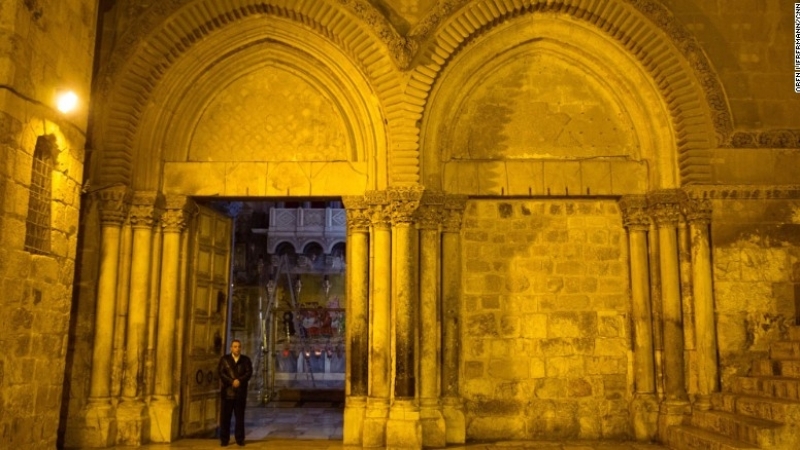
In the Covenant of the Prophet Muhammad with the Monks of Mt. Sinai, the famous Ashtiname of Muhammad, ‘ahd nabawi or ‘ahd al-nabi, the Messenger of Allah (pbuh), promises the Christians from the Monastery of St. Catherine in the Sinai Peninsula, that “no building from among their churches shall be destroyed” and warns that “whoever does such a thing violates God’s covenant and dissents from the Messenger of God” (Morrow, vol. 3:2). Not only are Muslims prohibited from demolishing churches, they are exhorted to maintain them, “These people shall be assisted in the maintenance of their religious buildings and their dwellings; thus, they will be aided in their faith and kept true to their allegiance” (Morrow, vol. 3:3).

In the Covenant of the Prophet Muhammad with the Christians of Persia, which was provided to the Armenian Christians of Persia, and was preserved in the Cathedral of New Julfa, in Isfahan, Iran, the Messenger of Allah (pbuh), states that “All pious believers shall deem it their bounden duty to defend believers and to aid them wherever they may be, whether far or near, and throughout Christendom” (Morrow, vol. 3:5).

But what exactly does it mean to protect Christian believers? The Prophet (pbuh), provides the definition. It consists in protecting “the places where they conduct worship, and those where their monks and priests dwell” (Morrow, vol. 3:5–6). He decreed that “their building enterprises shall not be interfered with… neither shall their churches be dismantled or destroyed, or their homes and mansions confiscated by Muslims, for mosques or residences, without their consent” (Morrow, vol. 3:6). What is more, he encouraged Muslims to help Christians repair their churches, chapels, and monasteries.

But for what reason, you may ask. As the Prophet (pbuh) most logically explains, for “the interest of the benevolent Muslim public and of their faith… as an expression of friendship and goodwill” (Morrow, vol. 3:7–8). The relationship is reciprocal. It can help seal a fraternal understanding. That is how you build bonds of brotherhood and sisterhood. That is how you promote social cohesion, tolerance, and coexistence. That is how you unite a diverse community. That is how you honor the signs of God.

Is there any territorial limitation to such obligations of protection of both persons and property? Absolutely not. As the Messenger of Allah (pbuh) explains, it applies

…everywhere, in mountains, on the plains, in towns and in waste places, in deserts, and wherever they may be, that people shall be protected, both in their faith and in their property, both in the West and in the East, both on sea and land (3:5–6).

The Messenger of Allah (pbuh) was not establishing municipal law, state law, or federal rights: he was establishing universal human rights. In fact, he was the very first to do so in the history of humanity. The rights he gave, he gave to all the world. He also warned that “Whosoever shall not do as is here prescribed, but shall do contrary to my behests; the same shall be held a despiser of this Compact, and a gainsayer of the word of God and of his Prophet” (Morrow, vol. 3:6).

In the Covenant of the Prophet Muhammad with the Christians of Najran, which was found by Habib the Monk in the Bayt al-Hikmah of Baghdad in the 9th century CE, the Messenger of Allah (pbuh) states,

I commit myself to support them, to place their persons under my protection, as well as their churches, chapels, oratories, the monasteries of their monks, the residences of their anchorites, wherever they are found, be they in the mountains or the valleys, caves or inhabited regions, in the plains or in the desert” (Morrow, vol. 3:15).

He also stresses, “it is not permitted to destroy any part of their churches, to take parts of their buildings to construct mosques or the homes of Muslims” and warns, “whoever does such a thing will have violated the pact of God, disobeyed his Messenger, and become estranged from the Divine Alliance” (Morrow, vol. 3:16).

In the Covenant of the Prophet Muhammad with the Christians of the World, which was rediscovered in a monastery in the Levant in the 17th century by Father Pacifique de Provins, and published in Paris by Gabriel Sionita, the Messenger of Allah (pbuh) declares,

I grant security to their churches, their places of pilgrimage wherever they are and wherever they may be found, be they in the mountains or the valleys, in the caves or inhabited regions, in the plains or the desert, or in buildings; and that I protect their religion and their property wherever they are and wherever they may be found in land or at sea, in the East or West, in the same way that I protect myself, my successors, and the People of My Community among the Believers and the Muslims (Morrow, vol. 3:21).

The Messenger of Allah (pbuh) asserts that “it is not permitted to destroy any part of their churches, to take parts of their buildings to construct mosques or the homes of Muslims” (Morrow, vol. 3:21). He states that “if the Christians seek the help and assistance of the Muslims in order to repair their churches and their convents… they must help and support them” (Morrow, vol. 3:23). However, he stresses, “they must not do so with the aim of receiving any reward” but rather “they should aim to restore that religion, out of faithfulness to the pact of the Messenger of God, by pure donation, and as a meritorious act before God and His Messenger” (Morrow, vol. 3:23). Once again, he warns, “whoever does such a thing will have violated the Pact of God, disobeyed his Messenger, and betrayed the Divine Alliance” (Morrow vol. 3:21).

In the Covenant of the Prophet Muhammad with the Christians of the World, which was copied in Egypt in 1538 from an ancient manuscript, the Messenger of Allah (pbuh) states,

I grant security to them, their churches, their businesses, their houses of worship, the places of their monks, the places of their pilgrims, wherever they may be found, be they in the mountains or the valleys, caves or inhabited regions, the plains or the desert (Morrow, vol. 3: 26).

He also states that Muslims must help and support Christians if they seek their assistance to repair their churches and convents (Morrow, vol. 3:28). He stresses that they should only do so to restore that religion, out of faithfulness to the Covenant of the Prophet, as a pure good deed, and as a blessed act before God and His Messenger (Morrow, vol. 3:28).

In the Covenant of the Prophet Muhammad with the Assyrian Christians, which was housed in the Cathedral of Jilu until the 19th century, the Messenger of Allah (pbuh) proclaims, “Leave their places of worship in peace” (Morrow, vol. 3:31); “Leave all their possessions alone, be it house or other property, do not destroy anything of their belongings” (Morrow, vol. 3:31). In the words of the Prophet, “their church buildings shall be left as they are, they shall not be altered” (Morrow, vol. 3:31); “None of their churches shall be torn down, or altered into a mosque, except by the consent and free will of the Christians” (Morrow, vol. 3:31). And, once again, he warns, “If anyone disobeys this command, the anger of God and His Prophet shall be upon him” (Morrow, vol. 3:31).

In the Covenant of the Prophet Muhammad with the Coptic Christians, the Messenger of Allah (pbuh) professes,

I will defend their dwellings and their houses of prayer and their churches, their monasteries and their gathering places, the gathering places of their monks and priests and hermits, the places of their hermits, and their monks’ cells and grottos (Morrow, vol. 2:236).

He iterates, “nothing shall be removed from their places of prayer or from their churches which they have” (Morrow, vol. 2:237). He also assures, “every building of their places of prayer and churches that was destroyed shall be rebuilt as it was at first” (Morrow, vol. 2:237). In other words, not only are Muslims required to respect, protect, and preserve religious institutions of other faiths, they are obliged to rebuild any of them that were destroyed.

In the Covenant of the Prophet Muhammad with the Syriac Orthodox Christians, the Messenger of Allah (pbuh) offers the same promise of protection,

I grant security and safety to their churches, their homes, their places of worship, their monasteries, their sites of pilgrimage, wherever they are and wherever they may be, be they in mountains or valleys, in caves or inhabited regions, in plains or in the desert and buildings (Morrow, vol. 2:342).

We see the very same thing in the Covenant of the Prophet Muhammad with the Armenian Christians, in which he says,

I safeguard them and remove all harm from them and from their churches, cloisters, convents, and places of worship, wherever they may be found, by they in mountains, valleys, caves, inhabited regions or in the plains (Morrow, vol. 2:477),

and in which he asserts, “It is not permitted to destroy or take parts of their ancient churches to construct mosques or homes for the Muslims” (Morrow, vol. 2:477).

This version is particularly interesting since it speaks not only of existing structures, but to ancient churches. Protection, therefore, is not limited to modern, contemporary, buildings, but also applies to those of historical importance.